

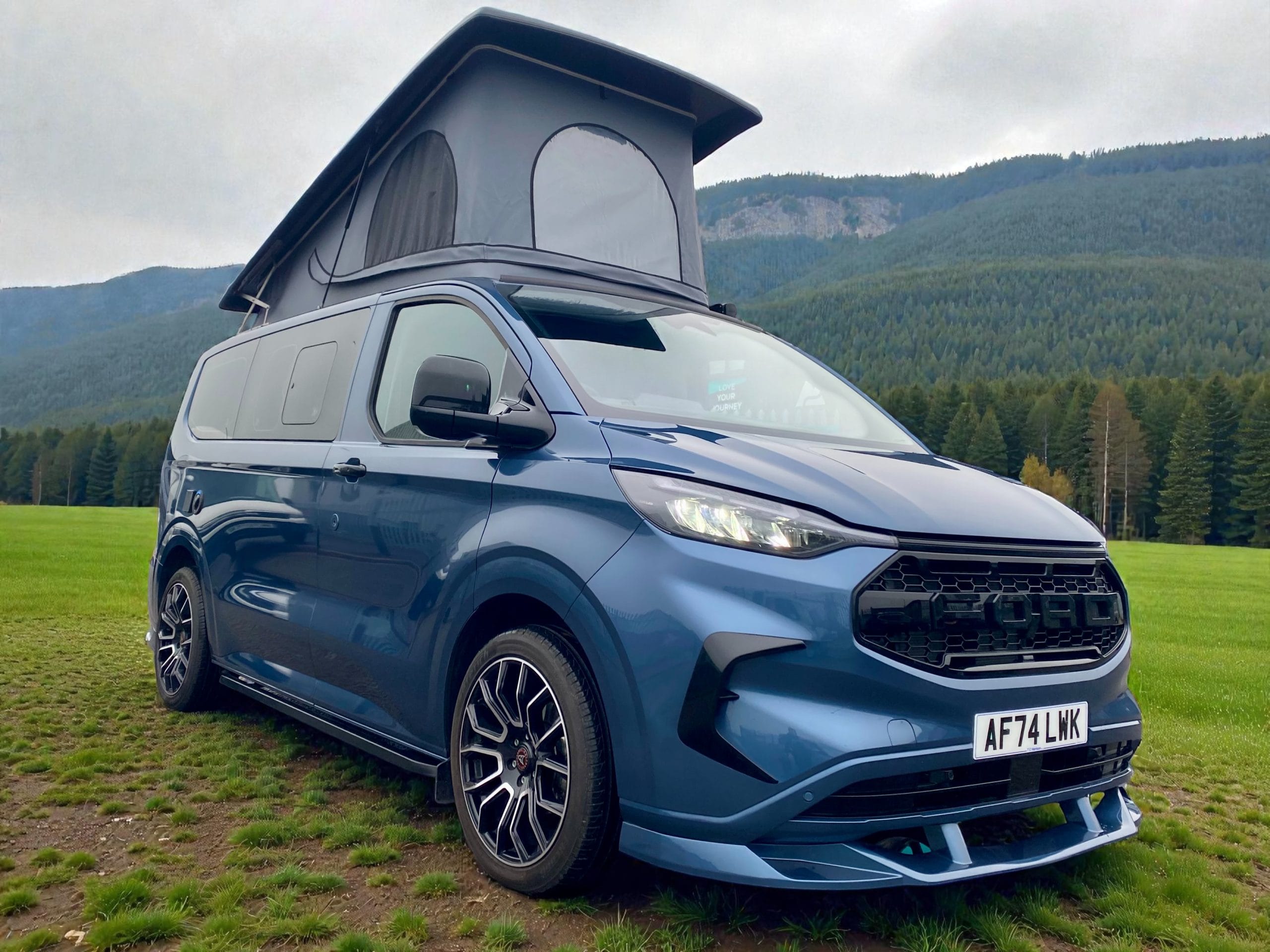
The latest Ford Transit Custom, launched in 2024, makes a strong base for a campervan. It comes with a choice of diesel engines or a plug in hybrid, an eight speed automatic, all wheel drive on some versions, and a big standard screen and safety kit. It is also the base for our own Ford Transit Custom camper, the Escape Apex.
This guide covers the numbers that matter when the Transit Custom becomes a camper, and what to check on any conversion before you buy.

Engines and gearboxes
These details come from Ford’s UK Transit Custom brochure and the Transit Custom pages on ford.co.uk.
| Powertrain | Output | Gearbox |
|---|---|---|
| 2.0 EcoBlue diesel | 110, 136, 150 or 170PS | 6 speed manual as standard; 8 speed automatic on the 136 and 170PS |
| 2.5 plug in hybrid (petrol) | 232PS | Automatic |
| E Transit Custom (electric) | 100, 160 or 210kW | Automatic |
All wheel drive is available on the automatic 136 and 170PS versions. Manual vans get a mechanical limited slip differential instead. For a camper that will see muddy campsites and wet grass, either is worth a look.
The plug in hybrid
The plug in hybrid pairs a 2.5 litre petrol engine with an 11.8kWh battery. Ford quotes an electric range of up to 33 miles, enough for many short local trips on electric power alone. Ford also offers an optional Pro Power Onboard system that lets you plug in electric devices while on site. Ford describes it for tools and equipment, not camping, so ask your converter how it works with the leisure electrics before you count on it.
Size, weight and payload
| L1 (short) | L2 (long) | |
|---|---|---|
| Length | 5,050mm | 5,450mm |
| Height (unconverted, H1) | 1,959 to 2,040mm | 1,963 to 2,031mm |
| Width with mirrors | 2,275mm | 2,275mm |
| Load length to bulkhead | 2,602mm | 3,002mm |
| Turning circle, kerb to kerb | 10.9m | 12.1m |
Gross vehicle weights are 2,825kg, 3,025kg or 3,225kg depending on the version, so every Transit Custom sits under 3,500kg and you can drive it on a normal car licence. Ford says the van is under 2.0 metres tall only on H1 models without 19 inch wheels, and that is before any conversion. A pop top adds height, so always ask for the measured height of the finished camper.
Payload on the panel van ranges from 908kg to 1,407kg depending on the version, with a 75kg driver already taken off. Ford notes that aftermarket conversions may reduce payload, and a camper conversion certainly uses some of it. Ask for a weighbridge figure for the finished van. Our 4 berth campervan guide explains how to work out what you can carry.
Towing
Ford quotes braked towing of 2,500kg to 2,800kg for most diesel versions, 2,000kg for the 110PS, and 2,300kg for the plug in hybrid and electric vans. Trailer Sway Control is standard. Remember that anything you tow also has to fit within the van’s gross train weight.
Cab, tech and safety
Every Transit Custom has a 13 inch SYNC 4 touchscreen. Ford’s Co Pilot 360 driver assistance is standard, including Pre Collision Assist, Lane Keeping Aid and Intelligent Speed Assist. Hill Start Assist, a heated windscreen, rear parking sensors and keyless start are standard too. Options include adaptive cruise control with stop and go, blind spot information and a 360 degree camera, all useful in a van you might drive a long way on holiday.
The press rates it. Parkers named the Transit Custom Best Medium Van in its 2025 awards and Medium Van of the Year for 2026.
Warranty and conversions
Ford gives every new commercial vehicle a warranty of three years or 100,000 miles, whichever comes first. Ford also runs a programme for approved convertors, and says that with a convertor outside that network, the convertor is your main point of contact for maintenance and warranty support on the conversion.
Whoever builds your camper, ask two questions: how the base van’s Ford warranty is handled, and what warranty covers the conversion itself. Our Apex comes with our 3 year conversion warranty.
The Escape Apex: our Ford Transit Custom camper
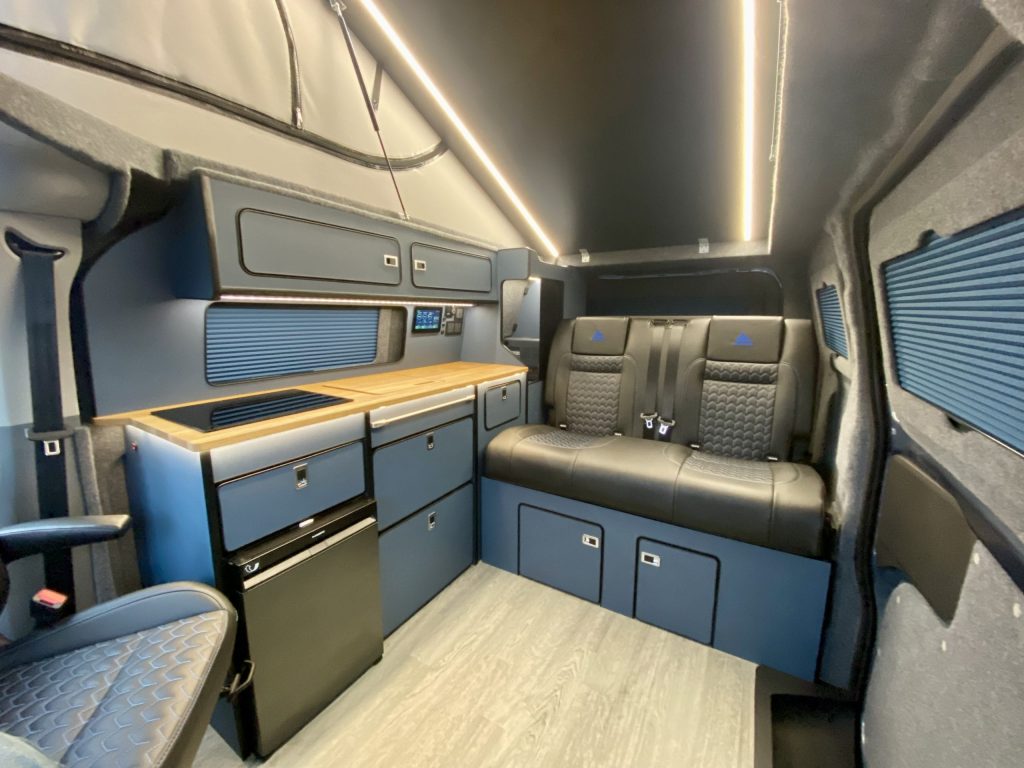
We have built the Apex on diesel and plug in hybrid Transit Customs. The standard specification includes:
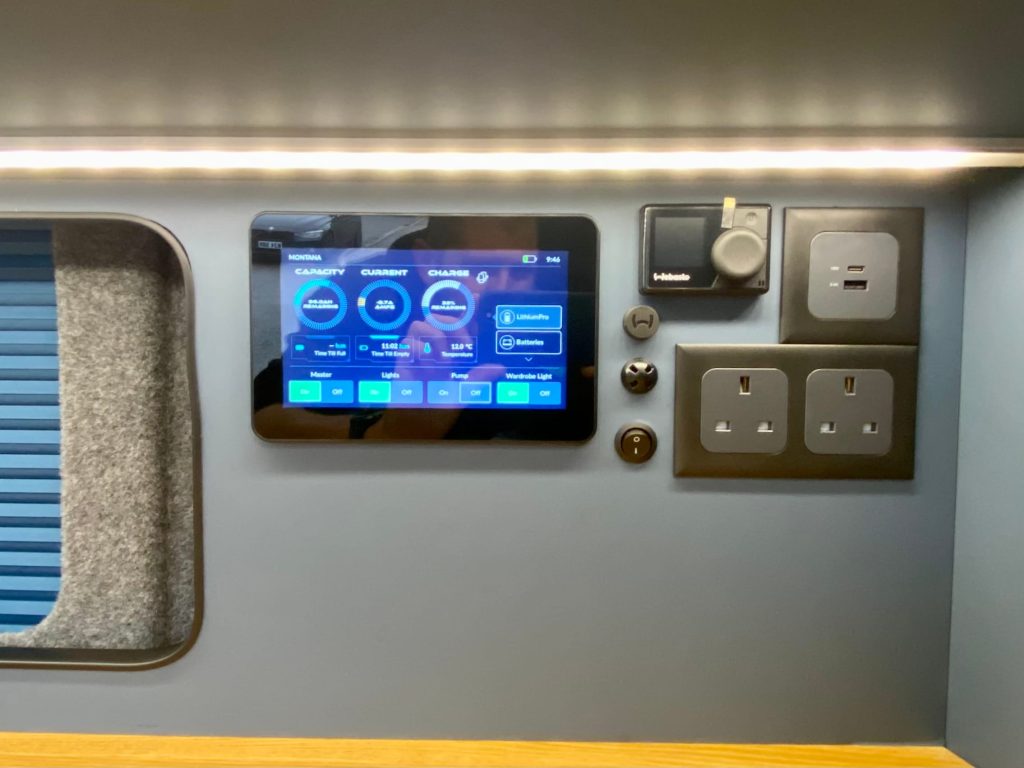
- A Victron MultiPlus II 3000 inverter charger, twin panel solar with a Victron MPPT controller, and a Victron Orion DC to DC charger
- A 280Ah Lithium Pro leisure battery
- A Webasto heater
- A Dometic 50 litre fridge freezer, an induction hob and an air fryer
- A pop top roof with an insulated canvas and a Halo LED roof bed
- A RIB seat bed, leather upholstery and an M1 tested front swivel seat
- An F45S canopy awning, Vanshade blinds and an external shower point
- A Porta Potti with its own storage space
See the current Apex builds on our ranges page, read more in inside the Transit campervan, or call the workshop on 01733 639 206.
What to check on any Ford Transit Custom camper
- The measured height with the pop top down, especially if the van has 19 inch wheels.
- A weighbridge weight for the finished van, and the payload that leaves.
- The rear seat bed paperwork, and whether it covers the 2024 Transit Custom. Our guide to M1 tested rock and roll beds explains what to look for.
- How the van is heated off grid. See our diesel heater guide.
- The warranty on both the base van and the conversion.
Questions we get asked
Is the Ford Transit Custom good for a campervan?
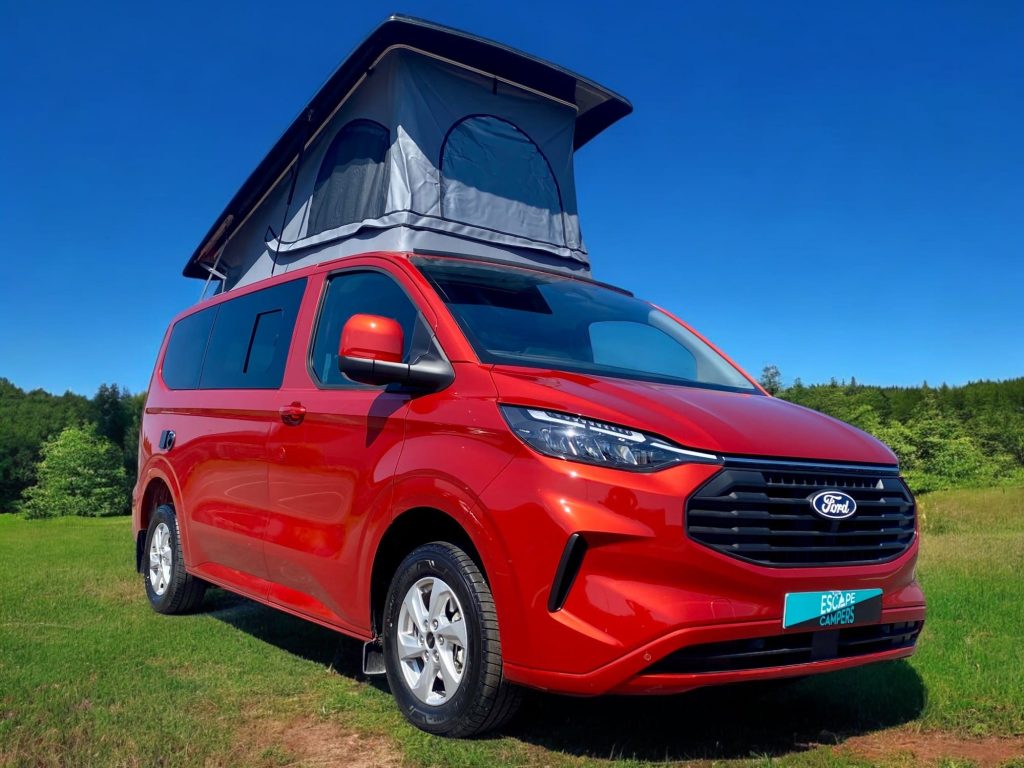
Yes. It offers diesel and plug in hybrid power, an eight speed automatic, all wheel drive on some versions, a gross weight under 3,500kg and a lot of standard safety kit. That combination is why we build the Apex on it.
Can you get a Ford Transit Custom camper with an automatic gearbox?
Yes. The 136 and 170PS diesels are available with an eight speed automatic, and the plug in hybrid is automatic.
How long is a Ford Transit Custom?
5,050mm for the short wheelbase L1 and 5,450mm for the long wheelbase L2.
Will a Ford Transit Custom camper fit under a 2 metre barrier?
Do not assume so. Ford says the unconverted van is under 2.0 metres only on H1 models without 19 inch wheels, and a pop top adds height. Measure the finished van.