

A diesel heater is the best way we know to heat a campervan in a British winter. It burns a small amount of fuel from the van’s own tank, draws very little from the leisure battery, and keeps working when you are parked miles from a hook up post. That is why every van we build comes with a Webasto diesel heater as standard.
This guide covers how a diesel heater works, what it costs to run overnight, how it compares with gas and electric heating, and the safety points worth checking on any van you are thinking of buying.
How a diesel heater works
A diesel air heater is a small burner in a sealed unit. A fuel line runs to the van’s own fuel tank. The heater takes its combustion air from outside the van and sends its exhaust back outside through a silencer, so the air it burns never mixes with the air you breathe. A fan blows clean air across a heat exchanger and pushes warm air through ducting into the living space. The heater adjusts its output to hold the temperature you set on the controller.
Because it runs on the same diesel as the engine, you never carry a separate fuel. Webasto says its air heaters are approved to run while you drive, in all countries.
What the numbers look like
Webasto’s 2 kW air heater, the Air Top 2000 STC, is a useful benchmark. On Webasto’s own datasheet it gives:
- 0.9 to 2.0 kW of heat, adjusted steplessly
- 0.12 to 0.24 litres of diesel an hour
- 13 to 30 watts of electrical draw while running
These are the maker’s figures for that model. Heaters vary, so if you are looking at a particular van, ask which model is fitted.
What that means for your battery
At 30 watts on a 12 volt system, a heater draws about 2.5 amps. Over an eight hour night that is roughly 20 amp hours at most, and nearer 9 at the low setting. A modern lithium leisure battery handles that easily.
Compare that with a 2,000 watt fan heater run through an inverter. That pulls around 167 amps from a 12 volt battery before losses. It would flatten a 175Ah battery in about an hour. This is the whole case for diesel heating when you are off grid.
What a night of heat costs
The UK average price of diesel was 195.53p a litre in the week of 21 September 2026, according to the government’s weekly road fuel prices. Using the Air Top 2000 STC’s consumption figures, eight hours of heating costs:
| Setting | Fuel over 8 hours | Cost over 8 hours | Cost per hour |
|---|---|---|---|
| Low (0.12 l/h) | 0.96 litres | £1.88 | 23p |
| High (0.24 l/h) | 1.92 litres | £3.75 | 47p |
In practice a heater runs hard to warm the van, then drops back to hold the temperature. How much it burns depends on insulation, the weather and where you set the thermostat. Fuel prices move every week, so treat these as a guide at the date shown.
Campervan heating options: diesel, gas, electric or hydronic?
There are four main types of campervan heaters. Each suits a different kind of trip.
| Type | Fuel | Works off grid? | Watch out for |
|---|---|---|---|
| Diesel air heater | Diesel from the van’s tank | Yes | Fitting quality, exhaust routing, cheap unbranded units |
| Gas blown air | LPG from a bottle | Yes | Bottle space, gas installation and annual checks |
| Electric | Mains hook up | No | Site supply limits, battery drain through an inverter |
| Hydronic | Diesel, heating coolant or water | Yes | More involved to install |
Electric heater on hook up
Electric heat is cheap and simple when you are plugged in on a campsite. The limit is the supply. The Caravan and Motorhome Club says nearly all its sites supply a maximum of 16 amps, and the Camping and Caravanning Club says some of its sites are limited to 10 amps. A 1 to 2 kW fan heater takes a big share of that, so it pays to know what else is running.
Gas heater
Gas blown air heaters work well in motorhomes, but they need bottle storage and a proper LPG installation. The installation standard for leisure vehicles is BS EN 1949, and the Camping and Caravanning Club recommends an annual gas check as part of the habitation service.
Hydronic systems
Hydronic heaters warm a liquid rather than air. Webasto’s Thermo Top Evo heats the vehicle’s coolant and uses the van’s own fan and heat exchanger. Eberspächer’s Hydronic range can also heat tap water through a boiler. They are powerful, but more involved to fit than an air heater.
Installing a diesel heater in a campervan
Fitting a diesel heater means work on the van’s fuel system, its floor and its electrics. A proper installation covers four things:
- A fuel pickup in the van’s fuel tank, with a line and a small pump feeding the heater
- A combustion air intake and an exhaust with a silencer, both routed outside the van
- Ducting that carries warm air to where you want it inside
- A fused supply from the leisure battery and a controller you can reach from bed
How much it costs to fit depends on the heater and the van, so we will not quote a figure here. On our builds it is part of the standard specification, fitted during the conversion.
Safety: the parts that matter
A properly installed diesel heater is safe. The risks come from poor installation and poor quality units, which is why professional installation matters.
Fit a carbon monoxide alarm
We could not find a UK law that requires one in a privately owned campervan, but we treat it as essential in any van with a heater, a hob or a gas bottle. The Camping and Caravanning Club advises an alarm tested to BS EN 50291-2 and Kitemarked.
Be wary of cheap imported heaters
In January 2023 the Office for Product Safety and Standards reported that an imported diesel parking heater posed a serious risk of asphyxiation because it came without adequate installation instructions. The shipment was rejected at the border. The lesson is simple: the exhaust and combustion air routing matter as much as the heater itself.
Ask where the exhaust goes
On any van you are thinking of buying, ask who fitted the heater, where the exhaust leaves the van and how it is secured. A good converter answers that in a sentence.
Keeping the heat in
Heat loss decides how hard any heater has to work. Insulation in the walls and roof, covers over the windows and a sealed pop top canvas all keep warm air inside. Thermal curtains or blinds over the glass make a noticeable difference on a cold night, and our Breeze Plus and Apex builds come with Vanshade blinds.
Condensation is the other winter problem. Cooking, wet coats and breathing all add moisture to the air. A little ventilation, such as a window cracked open, lets that moisture out. Because a diesel heater burns its fuel outside the living space, it does not add combustion fumes or water vapour to the air inside the van.
The heating system we fit, and why
Every Escape build, the Renault Trafic Crusader, the VW T7 Breeze Plus and the Ford Transit Custom Apex, has a Webasto diesel heater as standard. We pair it with a lithium leisure battery (175Ah on the Crusader, 280Ah on the Breeze Plus and Apex) and solar charging, so you can run the heater all night without worrying about the battery.
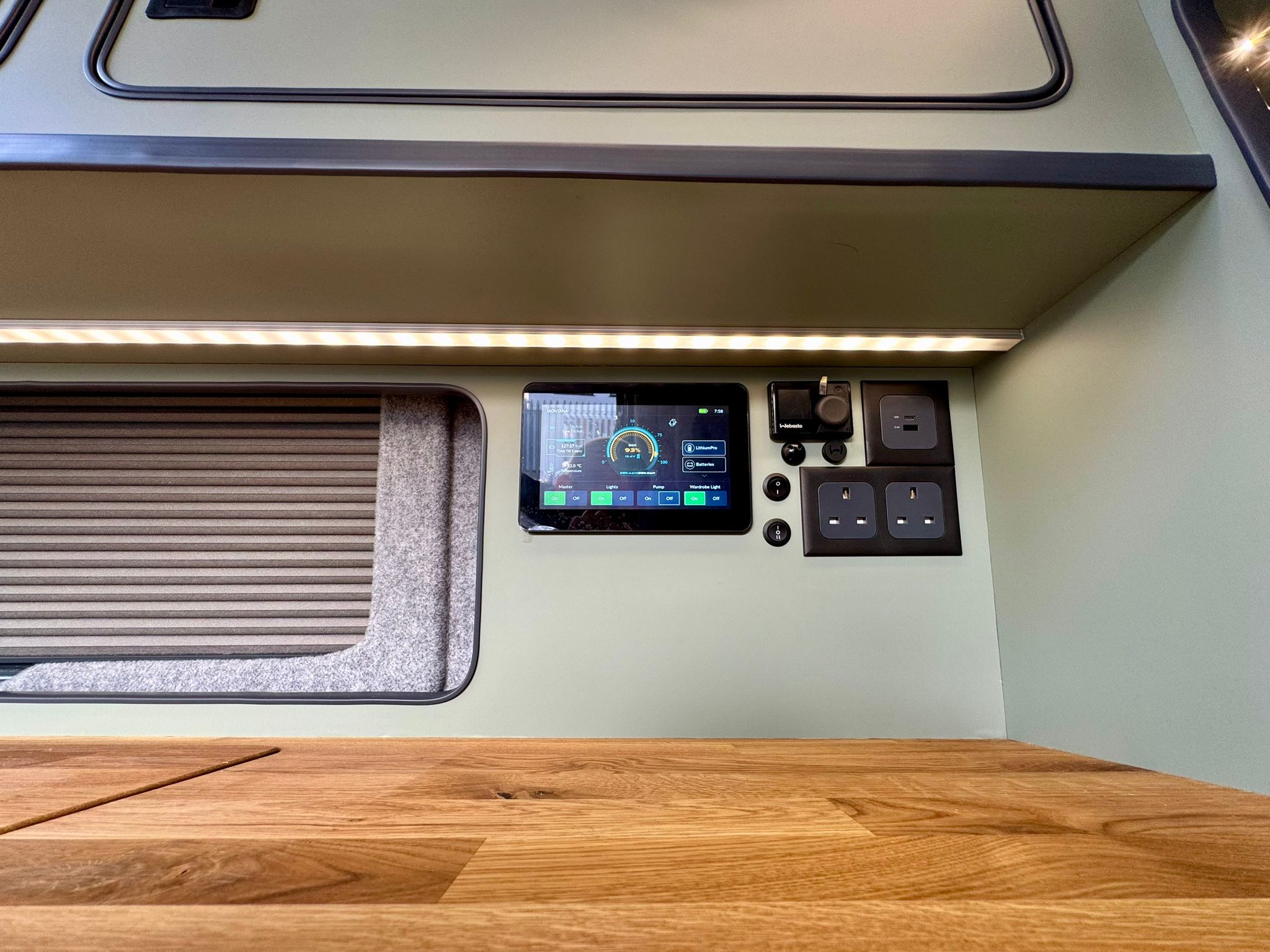
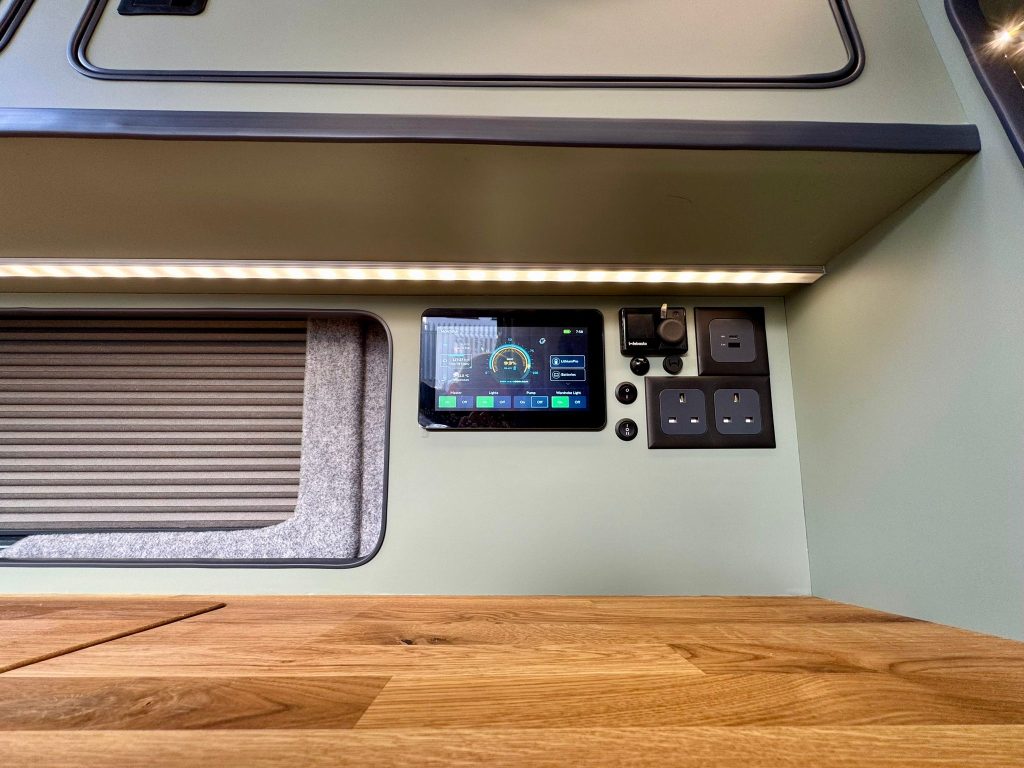
Our vans are lined with reflective Thermo-Liner insulation and wadding, and the pop top has an insulated canvas, so the warmth stays in. The controller sits by the main control screen, as you can see in the photo above.
Planning a winter trip? Read our winter campervan trips and our winter storage guide, or see the vans being built now on our ranges page.
Questions we get asked
Are diesel heaters safe in a campervan?
Yes, when a branded heater is installed properly with its combustion air and exhaust sealed off from the living space. Fit a carbon monoxide alarm as well, and have the heater serviced as the maker recommends.
How much does it cost to run a diesel heater overnight?
On Webasto’s figures for the Air Top 2000 STC and the UK average diesel price in late September 2026, eight hours costs between £1.88 and £3.75.
Will a diesel heater keep a campervan warm in winter?
Yes, and insulation decides how well the van holds that heat. That is why we line our vans with Thermo-Liner insulation and use an insulated canvas on the pop top.
Can I run the heater while driving?
Webasto says its air heaters are approved for heating while driving in all countries.
Can I heat a campervan from the leisure battery alone?
Not with an electric heater. A 2 kW fan heater would empty our 175Ah or 280Ah lithium batteries in under two hours. A diesel heater uses the battery only for its fan and controls.

