
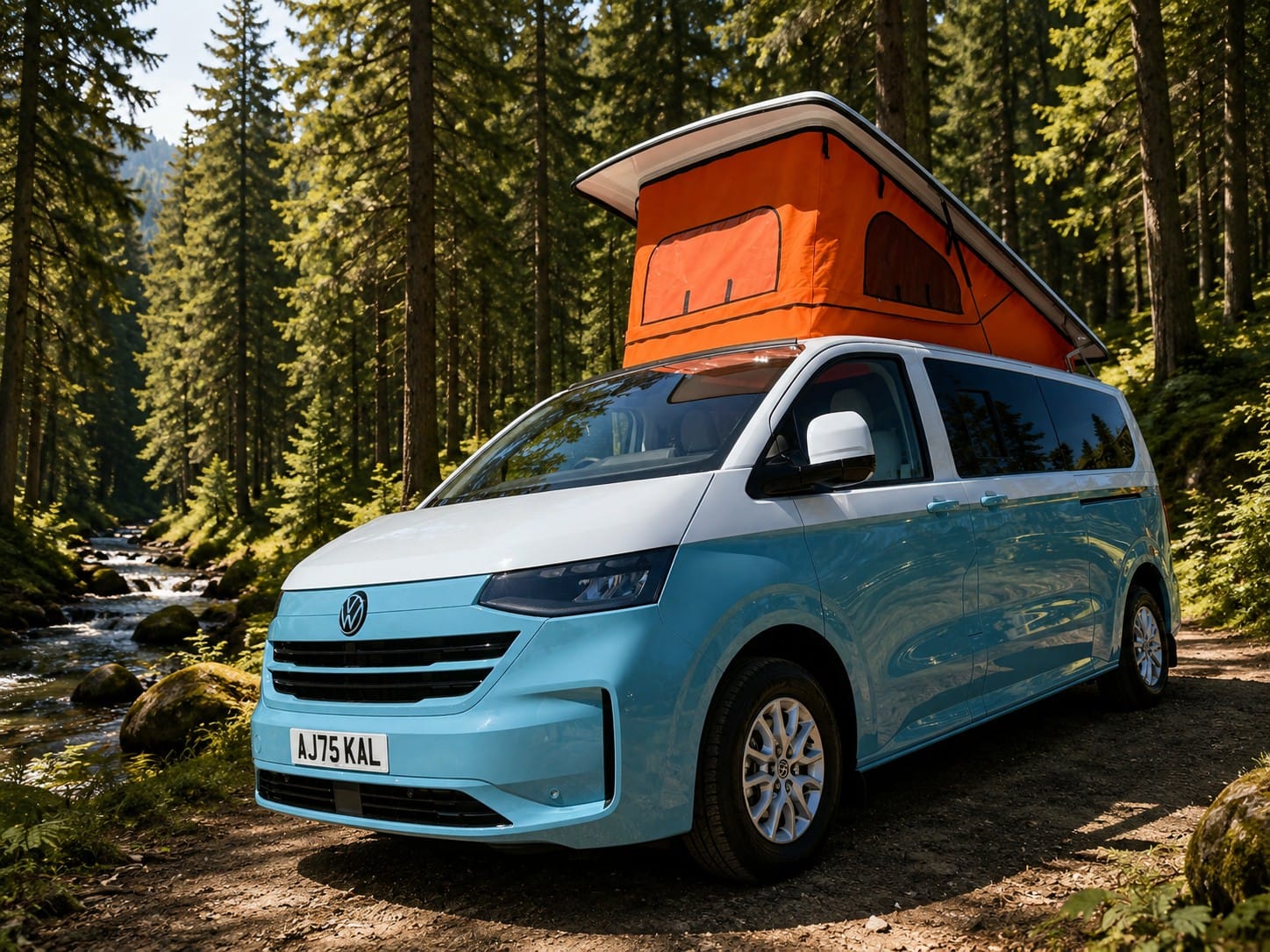
Wild camping in the UK is only a legal right in a few places, and none of them covers a campervan. In England, Wales and Northern Ireland you need the landowner’s permission to camp. In Scotland, and on parts of Dartmoor, you can wild camp with a tent if you arrive on foot, but those access rights do not extend to motor vehicles. That does not mean a campervan is stuck on big campsites. There are legal, low cost ways to spend a night somewhere quiet and wild, and a self-contained van opens most of them up.
This guide explains the rules in each part of the UK, where you can legally stay overnight in a campervan, and how to do it responsibly.
What counts as wild camping?
Wild camping means camping without the express permission of the landowner, away from an official campsite. For walkers that means a small tent on a hillside for one night. For campervan owners, the phrase usually means any overnight stay off a campsite: a forest car park, a quiet layby or a farm.
The distinction matters, because the laws that allow wild camping in parts of the UK were written for people on foot. They do not cover sleeping in a vehicle.
Is wild camping legal in the UK?
England and Wales
The Countryside and Rights of Way Act gives the public access to land mapped as open country and registered common land, but it does not include a right to camp. So wild camping in England and Wales is not permitted without the landowner’s permission. Open access land covers only about 8 per cent of England, and the rest is subject to the landowner.
Camping on private property without permission is trespass, which is a civil matter rather than a crime in most cases. In practice, a landowner can ask you to leave and you should go. National park authorities, including the Lake District, are clear that you need a landowner’s permission to stay overnight.
Did the Vagrancy Act repeal make wild camping legal?
No. The government repealed the Vagrancy Act on 29 June 2026, ending the offence of rough sleeping. It did not create any right to camp on someone else’s land, so the position for recreational wild camping in England and Wales is unchanged.
Dartmoor
Dartmoor is the one place in England with a legal right to wild camp. In May 2025 the Supreme Court ruled in Darwall v Dartmoor National Park Authority that the Dartmoor Commons Act gives the public a right to camp on the Dartmoor Commons. That right applies to people who reach the commons on foot or on horseback, and backpack camping in the permitted areas. It does not let you park a campervan on the moor overnight.
Scotland
The Land Reform (Scotland) Act 2003 gives everyone access rights to most land, and the Scottish Outdoor Access Code explains how to use them responsibly. Lightweight camping on unenclosed land is part of those rights. Motorised activities are not, so camping in a campervan, motorhome or car is not covered by Scotland’s access rights.
Loch Lomond and the Trossachs National Park
Loch Lomond has its own rules. Camping Management Zones cover some of the busiest loch shores, and from 1 March to 30 September you need a camping permit to camp or to sleep overnight in a vehicle inside them. Permits cost £4.50 per motorhome or campervan per night, are valid from 7pm to 10am, and there are dedicated motorhome permit areas at Firkin Point and Inveruglas on the west side of Loch Lomond and on the Three Lochs Forest Drive near Aberfoyle, which has an extra £3 vehicle access charge. The national park says no permit is needed between 1 October 2026 and 28 February 2027.
Northern Ireland
The position in Northern Ireland is the same as in England and Wales. You need the landowner’s permission to camp.
Where can you legally stay overnight in a campervan?
Forestry and Land Scotland’s Stay the Night scheme
This is the best legal option for campervans in Scotland. Stay the Night lets self-contained motorhomes and campervans stay overnight in participating forest car parks, and it now runs through the year, with fewer car parks open over winter. The key rules:
- Your vehicle must include accommodation and toilet facilities. Pop up tents and toilets beside the van are not allowed.
- It costs £10 at most car parks and £13 at the sites with chemical waste disposal, paid on arrival through RingGo.
- You can stay one night only, between 6pm and 10am, and you must not return to the same car park within 48 hours.
- No fires, no barbecues and no generators. Take all rubbish away and leave at least 4 metres between vans.
- Blue Badge holders stay free.
Small certificated sites
The Caravan and Motorhome Club’s Certificated Locations and the Camping and Caravanning Club’s Certificated Sites are small, members only sites, often on farms, usually limited to a handful of vans. Facilities are basic, the setting is often far quieter than a full campsite, and they are about as close to legal wild camping in England as it gets.
Pubs, farms and private land with permission
Schemes such as Brit Stops connect members with pubs, farm shops and vineyards that let self-contained vans stay for a night. Hosts appreciate you buying a meal or something from the shop. You can also simply ask a farmer or landowner. With permission, it is no longer wild camping in the legal sense, and many people find that the friendliest way to stay somewhere special.
Council motorhome stopovers
Some councils provide paid overnight bays for motorhomes and campervans, while others ban sleeping in their car parks altogether. Rules vary from one area to the next, so check the council’s parking pages before you go. Apps help here too, and our guide to the best apps for campervan travel covers the ones worth downloading.
Can you sleep in a campervan in a layby or car park?
Sleeping in a legally parked vehicle is not, on its own, an offence in the UK. What catches people out are the local rules: parking orders, car park terms and conditions, national park byelaws and “no overnight parking” signs. Loch Lomond’s byelaws, for example, make it an offence to sleep in a vehicle in a Camping Management Zone without a permit, except on the road itself, such as a layby.
Even where it is allowed, a layby on a busy road is rarely quiet or safe. If you do stop, obey every sign, move on if you are asked, and never block a gate, a passing place or a farm entrance.
Drinking and sleeping in your campervan
Be careful here. In the UK you can be prosecuted for being in charge of a vehicle while over the legal limit, even if you are not driving. The government’s drink driving penalties include possible imprisonment, an unlimited fine and a driving ban. If you plan to have a drink, book a campsite or a pitch where you are clearly staying put, rather than a roadside stop.
How to wild camp responsibly in a campervan
- Arrive late, leave early. Stay one night, two at most, then move on.
- Leave no trace. Take every bit of rubbish and litter home, and leave the spot as you found it.
- Empty the toilet properly. Toilet waste goes only into a chemical disposal point, never a drain, a bin or the ground. In Scotland, CAMPA lists waste disposal sites.
- Keep grey water in the van until you reach a proper drain.
- No fires. They damage vegetation, scare animals and are banned at Stay the Night sites.
- Keep noise levels down, especially late at night and early in the morning, and do not run a generator.
- Stay on hard ground. Never drive a vehicle off road onto verges, fields or open spaces.
Why a self-contained van makes it so much easier
Most legal overnight spots, from Stay the Night to the Loch Lomond permit areas, are built around self-contained vehicles. That means a van with its own bed, cooking, water, power and toilet, so you leave nothing behind.
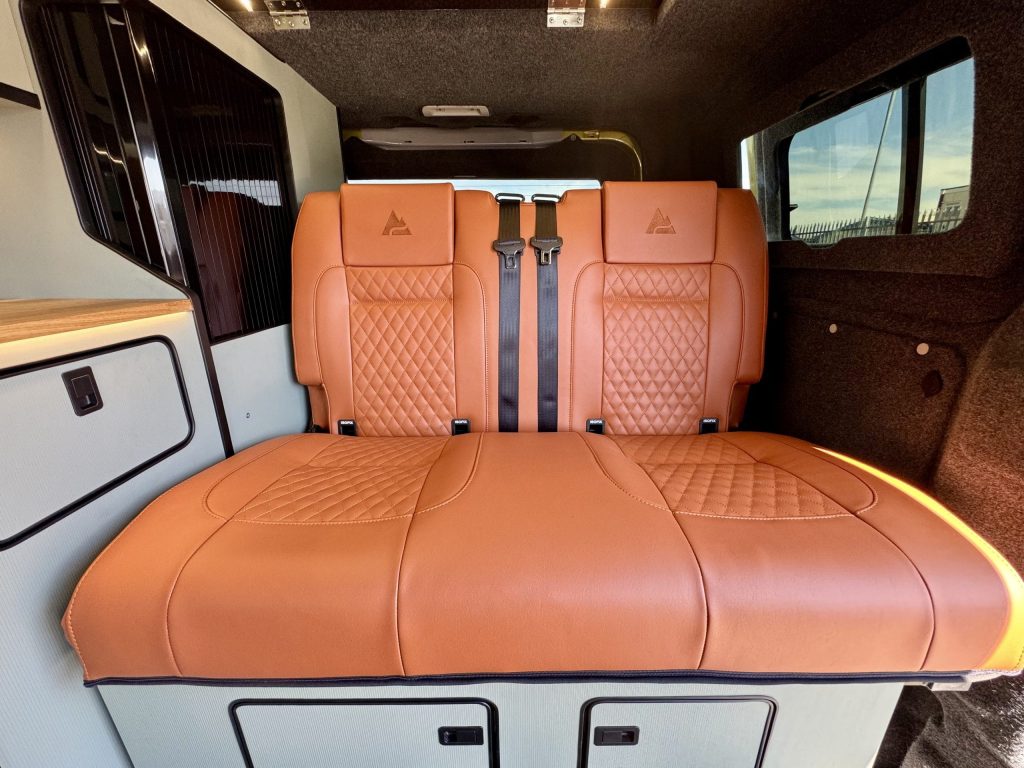
That is exactly how we build every Escape campervan. Each one comes with a Thetford Porta Potti and a place to store it, a sink and water tank, a Webasto diesel heater, a 50 litre fridge freezer, and a lithium leisure battery charged by solar and by the engine. You can read more in our guides to campervan toilets, campervan solar panels, leisure batteries and diesel heaters. If Scotland is on your list, our North Coast 500 guide is a good place to start.
Every build is converted in our Peterborough workshop, ready circa 4 to 6 weeks from order, with a 3 year conversion warranty. See the current builds on our campervans for sale page, or call the workshop on 01733 639 206.
Questions we get asked
Where can I legally wild camp in the UK?
With a tent, on most unenclosed land in Scotland and in the permitted areas of the Dartmoor Commons, as long as you arrive on foot. In a campervan, there is no general right to wild camp anywhere in the UK, so use Stay the Night in Scotland, small certificated sites, permit areas at Loch Lomond, or private land with the owner’s permission.
Can you park and sleep in a campervan anywhere in Scotland?
No. Scotland’s access rights do not cover motorised activities, so they do not cover sleeping in a campervan. Use the Forestry and Land Scotland Stay the Night car parks, Loch Lomond’s motorhome permit areas, campsites, or land where you have permission.
What happens if you get caught wild camping in the UK?
In England and Wales, camping without permission is usually trespass, a civil matter, and you will normally just be asked to leave. Some places have byelaws that make it a criminal offence, such as the Camping Management Zones at Loch Lomond, where you can be fined.
Is wild camping going to be legal in England?
There is no change to the law in England at the moment. Dartmoor remains the only place with a legal right to wild camp, and campaigners continue to push for wider access rights after the 2025 Supreme Court ruling. The 2026 repeal of the Vagrancy Act did not change the position.
What is the 333 rule for campervans?
It is an informal rule of thumb from the motorhome world, not a law: drive no more than about 300 miles in a day, arrive by 3pm, and stay at least three nights in one place. It keeps trips relaxed and means you are not hunting for somewhere to stop in the dark.
Can I drink alcohol and sleep in my campervan?
You can, but you can still be prosecuted for being in charge of a vehicle while over the limit, even if you are not driving. If you want a drink, stay somewhere you are clearly parked for the night, such as a campsite pitch.