

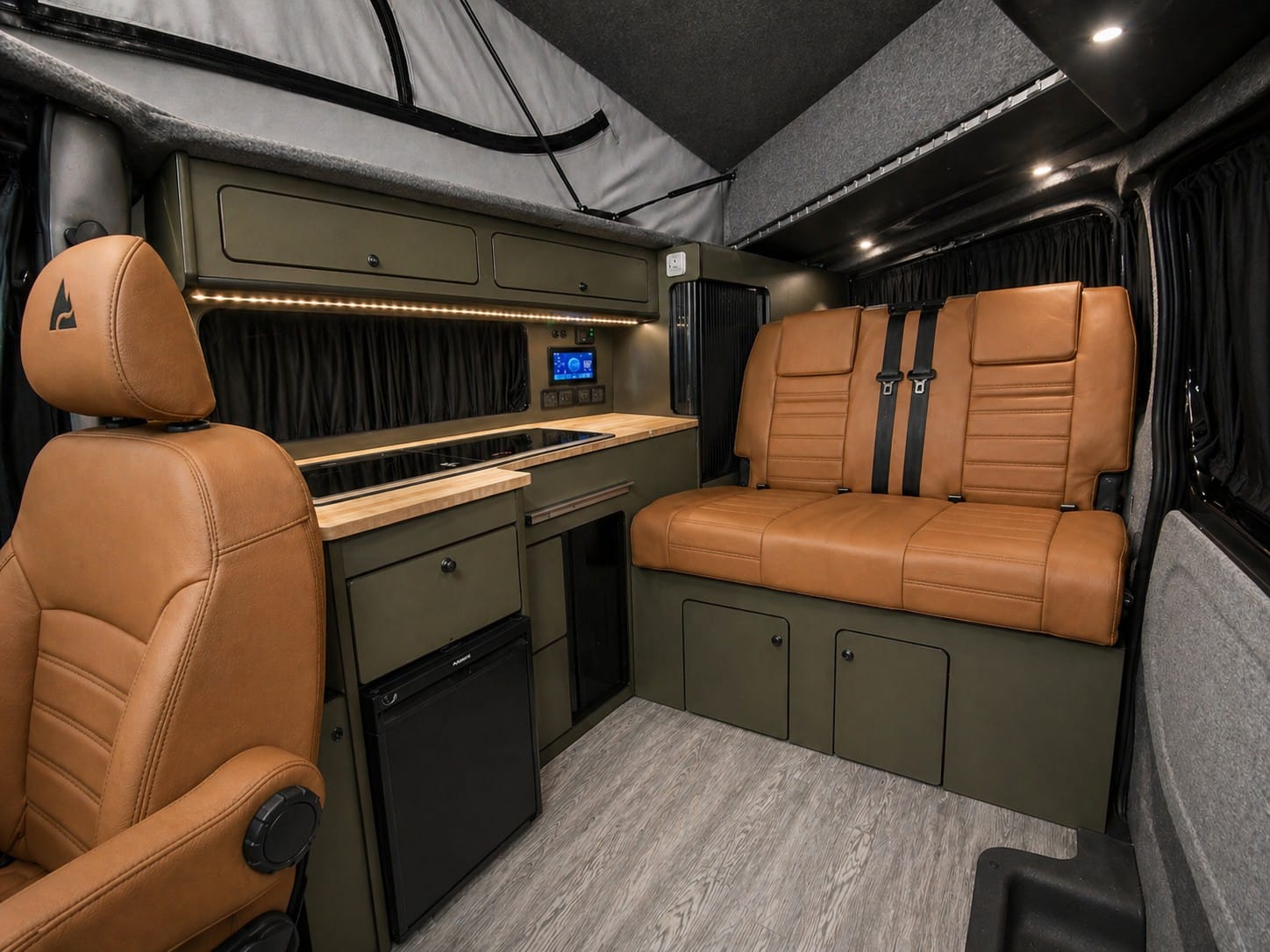
Air conditioning in a campervan comes down to three questions: where the unit goes, what powers it, and what it weighs. Get clear answers to those and you will know whether it suits your van and your trips. If you have a pop top roof, the first question is the hardest.
We do not fit air conditioning as standard or list it as an option on our builds, so this is a neutral guide to what is out there and what to ask. The figures come from the manufacturers’ own specifications.
The two main types
Rooftop units
Rooftop air conditioners sit in a hole cut in the roof, with the working parts outside and a vent inside. They come in 12 volt and 230 volt versions.
- Dometic’s RTX 1000 and RTX 2000 12V units give 1,100 and 1,700 watts of cooling and run straight from the leisure battery. The RTX 2000 has an inverter compressor and battery protection.
- Truma’s Aventa compact runs on 230 volts and gives 1,700 watts of cooling while drawing 3.3 amps. The roof unit is 245mm tall and weighs 23.2kg. Truma says running it on the move needs a battery and an inverter.
Rooftop units need a flat, fixed section of roof. Dometic’s FreshJet, for example, needs a 400 by 400mm cutout, a roof between 25 and 60mm thick, and a slope of no more than 10 degrees.
Under bench units
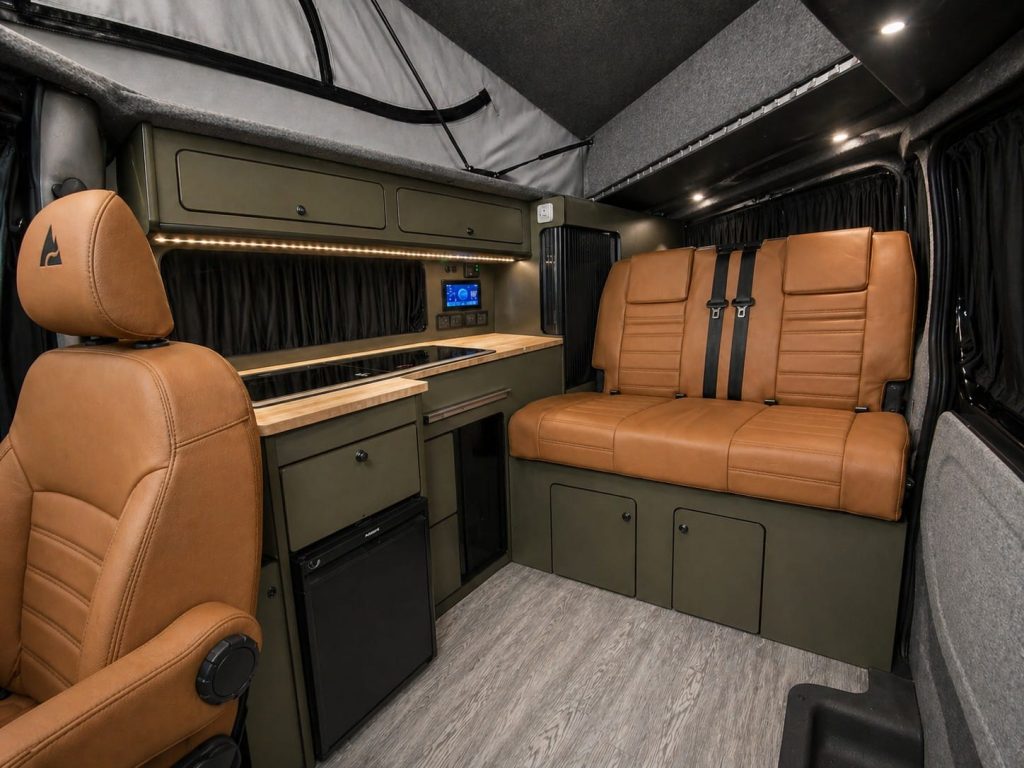
Under bench air conditioners live inside a seat base or cupboard and blow cool air through ducts. Dometic says its FreshWell FWX4 leaves the vehicle’s height unaffected. It gives 2,000 watts of cooling on 230 volts, draws 4.8 amps, and weighs about 21kg. Truma’s Saphir comfort RC gives 2,400 watts of cooling at 4.2 amps and weighs 23.5kg. It also has a start up draw of 20 amps for 150 milliseconds, and Truma recommends it for vehicles of 5.5 to 6.5 metres.
Why pop tops make it harder
A pop top roof lifts and folds. We have not found a rooftop air conditioner maker that approves fitting a unit to a lifting roof, and units like the FreshJet need a fixed roof section. On a pop top van, that usually leaves an under bench unit, which takes storage space you would otherwise use.
Every van we build has a pop top. When the van is parked, the pop top canvas and the two sliding side windows give you ventilation without any extra kit.
What powers it
This is the question to ask before any other. A 230 volt unit on a campsite hook up is simple. Running one off grid means running it through an inverter from the leisure battery.
For context, Victron’s MultiPlus II 12/3000 inverter charger is rated at 2,400 watts continuous at 25°C. Ask the converter to show you, with the actual unit’s figures, how many hours it will run from your battery before it needs charging. If they cannot, treat any runtime claim with caution.
Cab air conditioning for driving is a separate matter. Renault’s Trafic has air conditioning in the cab as standard, and the Extra Sport trim we use for the Crusader has climate control. The gap is cooling the living space when the engine is off.
Weight and payload
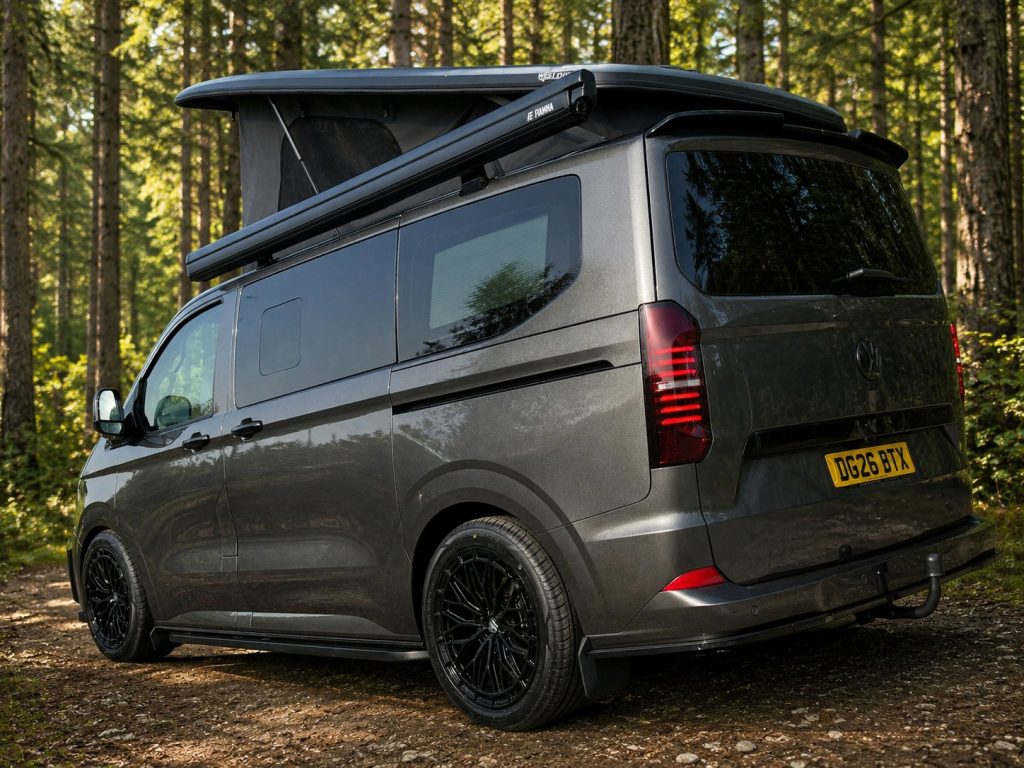
The units above weigh between about 21 and 30kg. That comes out of your payload, alongside the extra battery or wiring the unit may need. On a Renault Trafic L1H1 Extra Sport 170 automatic, Renault quotes a payload of 1,043kg before any conversion work. Every kilo of furniture, kit and air conditioning comes out of that. Our 4 berth campervan guide explains how to check payload properly.
Maintenance
Modern sealed units need less looking after than people expect. Truma says the Aventa’s refrigerant does not need to be replenished or replaced, and Dometic describes the FreshWell FWX4 as hermetically sealed. Truma also says the second generation Aventa does not need filter changes. Follow the manual for the unit you have.
Questions to ask your converter
- Where will the unit go, and is the roof or seat base approved for it?
- Which model is it, and what are its cooling output and current draw?
- How long will it run off grid from this battery, and how does the battery recharge?
- What does it weigh, and what does that leave for payload?
- Who fits it, and how does it affect the conversion warranty?
Alternatives worth considering
If you mainly want a cooler van at night rather than full air conditioning, a roof fan is a lighter option on a fixed roof. MaxxAir’s MaxxFan Deluxe runs on a 12 volt, 2 amp supply, has 10 speeds and a thermostat, and fits a 355 or 400mm opening. On a pop top van, parking in the shade with the roof up and windows open does a lot of the work.
If you want to talk through keeping cool in one of our builds, call the workshop on 01733 639 206 or browse our ranges. For more on what to check in any van, read our guide to buying a VW campervan.
Questions we get asked
Can you run campervan air conditioning off grid?
A 12 volt rooftop unit or a 230 volt unit through an inverter can run from a leisure battery, but only for as long as the battery lasts. Ask for the runtime calculated from the actual unit and battery.
Can you fit air conditioning to a pop top campervan?
Rooftop units need a fixed roof section, so on a pop top van the usual option is an under bench unit.
Do Escape Campers fit air conditioning?
Not as standard or as a listed option. Our vans have a pop top and sliding windows for ventilation, and a Webasto diesel heater for the colder months. The Crusader also has climate control in the cab from the Renault base van.

