

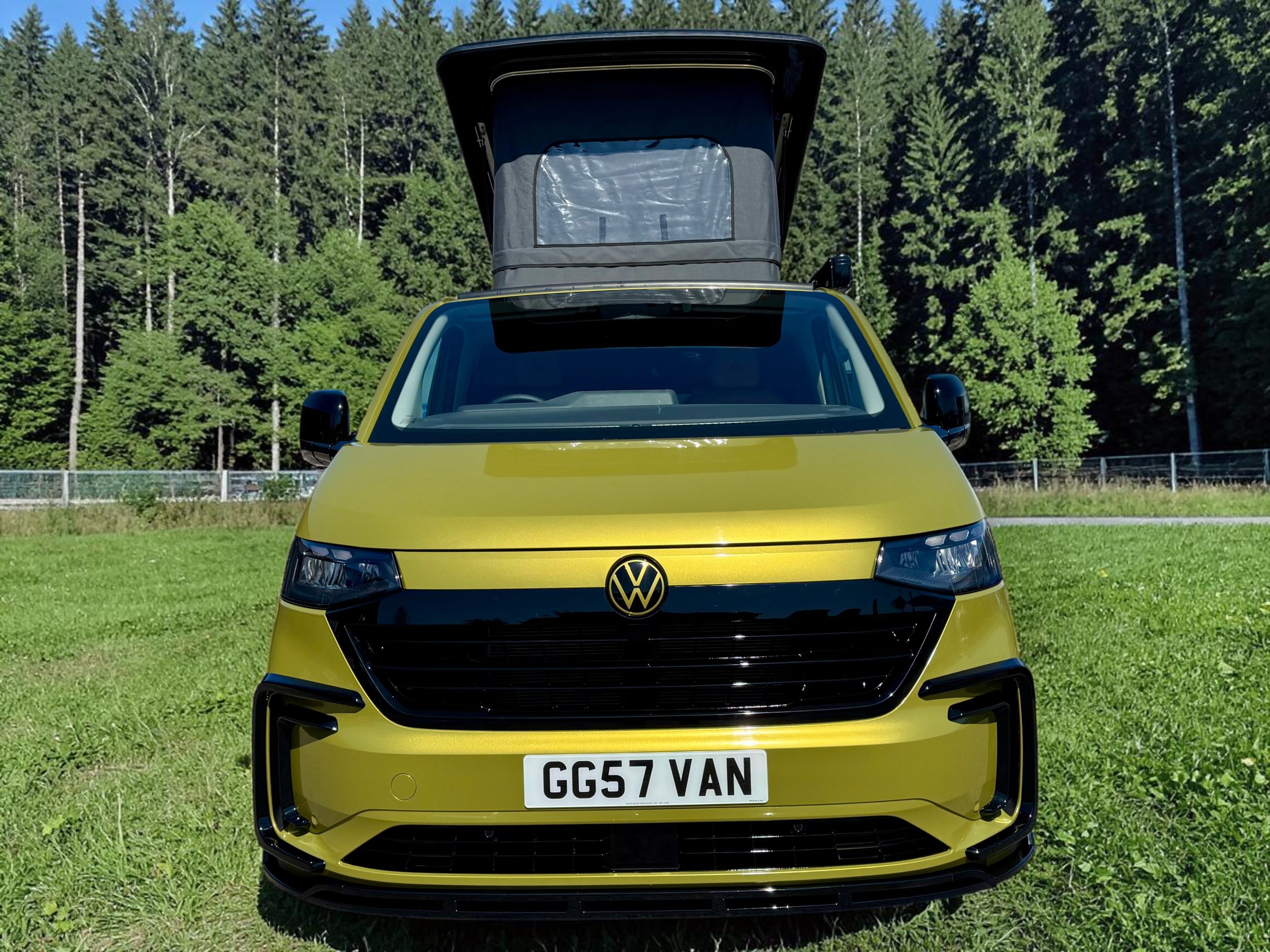
Most compact campervans do not have room for an internal shower. In a van around five metres long, a fixed shower room costs you kitchen, storage space or sleeping space you use every day, for something you might use a few times a trip. That is why most pop top campervans use an external shower point instead, alongside campsite facilities, and why full wet rooms tend to live in larger motorhomes.
This guide compares every campervan shower option, from outdoor showers and portable showers to built in wet rooms, and covers hot water, grey water and what actually fits in a small van.
Do you actually need a shower in a campervan?
It depends on how you travel. If you mostly stay on campsites, the shower block will usually beat anything you can fit in a van: heated, with unlimited hot water and proper pressure. If you spend more nights off grid, in forest car parks or on small sites with no facilities, you need some way to wash. And almost everyone wants a way to rinse off sandy feet, muddy boots, a wetsuit or the dog before getting back in.
So the real question is not whether you want a shower. It is which campervan shower setup gives you the most for the space it takes.
Campervan shower options compared
External shower point
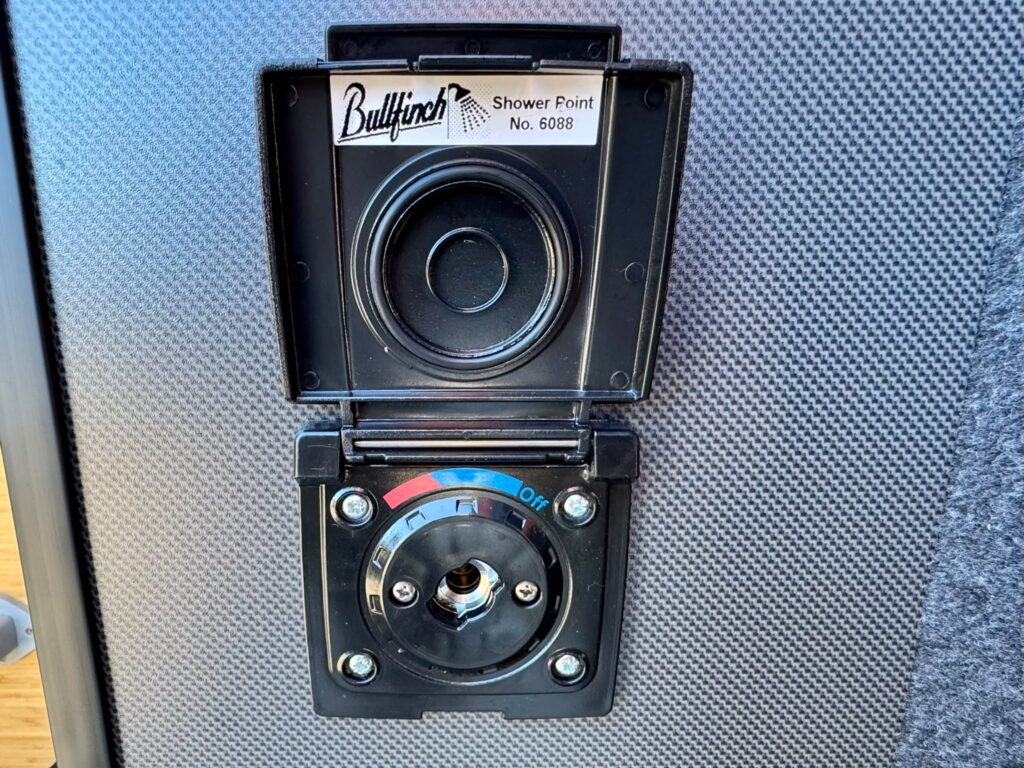
An external shower point is a small, sealed fitting on the side or rear of the van, connected to the fresh water tank and pump. You clip in a hose and shower head when you need it and close the cover when you are done. It uses no interior space at all.
It is the most practical option for most small campervans. The downsides are the weather and privacy, which is why many people pair it with a shower tent or a curtain across the open back doors. Some shower points, like the one in the photo above, have a mixer dial for hot and cold.
Portable showers: 12V and rechargeable
A portable shower is a small pump that sits in a bucket or water container and feeds a shower head on a hose. Some plug into a 12V socket and others have a rechargeable battery charged by USB. They are cheap, store easily and work anywhere. Pressure is modest, battery life is limited, and you still need to heat the water separately.
Solar shower bags
A solar shower bag is a black water bag you leave in the sun and hang up to shower. It is the cheapest option of all and packs flat. In the UK it is also the least reliable, because it needs a few hours of strong sun to warm up and is no use in cold weather.
Pressure sprayer showers
A pump up sprayer holds a few litres of water that you pressurise by hand. It needs no power, which makes it a handy backup for rinsing kit, but the small capacity and falling pressure make it a short shower.
Shower tents
A pop up shower tent gives you privacy for any outdoor option. It folds into a small bag, but you will be packing it away wet, and it needs pegging down well in the wind.
Internal shower room or wet room
An internal shower needs a dedicated space with a waterproof floor, a drain, full standing height and somewhere for the water to go. Even a compact shower tray takes up a large share of the floor in a small van. In a wet room layout the toilet and shower share one space, which saves room but leaves everything in there wet.
In a pop top van there is only full standing height when the roof is up, and an internal shower also adds weight, grey water and condensation. In a five metre campervan, that usually means giving up the kitchen, the storage or the sleeping space, and a big share of the living space you rest and cook in, so most owners choose the external route instead.
Does the base vehicle change your options?
Yes. The base vehicle sets the interior space you have to work with. A long wheelbase high roof van or a coachbuilt motorhome has the height and floor area for a proper shower room, often combined with a cassette toilet, and some larger layouts add a rear garage for bikes and kit. A compact panel van with a pop top roof is easier to drive, park and live with day to day, but its layouts are built around the bed and kitchen.
That is the trade off at the heart of choosing a campervan. If daily showers on board matter more than easy parking, look at bigger vans. If you want a van you can drive every day and take almost anywhere, an external shower point is the better fit.
Hot water and off grid power
Whichever shower you choose, hot water is the part that takes planning, because heating water takes energy and your off grid power is limited. The main options are:
- The kettle. Boiling water on the hob and topping up a portable shower or sprayer is free and works anywhere.
- Diesel combination heaters. Some diesel heaters heat water as well as air, running from the van’s own fuel tank.
- Gas water heaters. Common in motorhomes, but they need a gas supply, a flue and proper gas certification.
- Electric water heaters. A 230V water heater works on hook up, or from a large inverter and lithium battery, but heating water uses a lot of energy.
Every Escape build has a Webasto diesel heater for warmth and an off grid electrical system with a lithium battery and a Victron inverter charger. If hot water for the shower point matters to you, talk to us about it when you specify your build.
Water tanks and grey water
Showers use more water than people expect. A few minutes under a shower head can empty a large share of a small fresh water tank, so it pays to keep showers short and refill whenever you can.
If you shower inside, the waste water has to go into a grey water tank, which adds weight and needs emptying at a proper drain. Outside, use a biodegradable soap, keep soapy water well away from streams and lakes, and never let it run into a watercourse. On a campsite, use the grey water drain.
Every Escape build has a sink with its own water tank: an underslung tank on the Crusader, and an externally filled tank on the Breeze Plus and Apex.
Toilet and shower: plan the washroom together
The shower question and the toilet question are really the same question about space. A fixed washroom can hold a cassette toilet or a composting toilet with a shower over it. A compact van usually works better with a portable toilet that stores away, and a shower outside. Our campervan toilet guide compares the toilet options in detail.
Showering in winter
An outdoor shower is a summer thing for most people. In cold weather, plan on campsite shower blocks, a quick wash at the sink with hot water from the kettle, and a warm van to get back into. A diesel heater makes a big difference here: you can wipe down, change into dry clothes and warm up in minutes.
Campsite facilities and other ways to stay clean
Most UK campsites have decent shower blocks with all the home comforts, and some of the best are in the places campervan owners love most. Check the facilities before you book if a good shower matters to you. Leisure centres and gyms are another option on longer trips. On a hot day, a swim in the sea or a lake does the job, as long as you keep soap and shampoo out of the water.
A good routine matters more than the hardware. A quick wash at the sink, a rinse at the shower point and a proper shower on the next campsite will keep most people happy for a week. Hang a quick dry towel by the back doors and keep a bag for wet clothes, and the van stays dry inside.
What fits in an Escape campervan
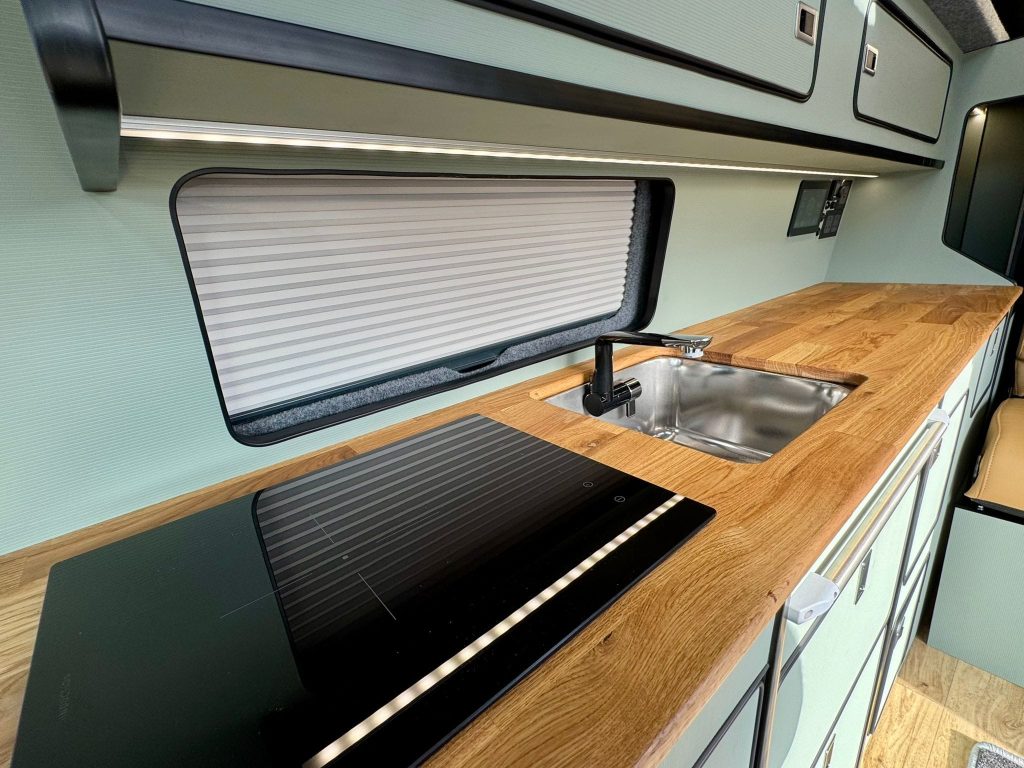
We build pop top campervans on the Renault Trafic, VW T7 and Ford Transit Custom, around a RIB seat bed and a proper kitchen. A fixed shower room would cost too much of that space, so every build comes with:
- An external shower point
- A sink and water tank
- A Thetford Porta Potti and a dedicated place to store it
- A Webasto diesel heater
- A 50 litre fridge freezer
- A lithium leisure battery with solar and DC to DC charging
- Gas or induction cooking, depending on the model
If a fixed washroom is essential, a larger motorhome may suit you better, and our guide to campervans against motorhomes explains the trade off. Our small campervan guide shows what fits in five metres, and our wild camping guide explains where a self-contained van can stay.
Every van is built in our Peterborough workshop, ready circa 4 to 6 weeks from order, with a 3 year conversion warranty. See the current builds on our campervans for sale page, or call the workshop on 01733 639 206.
Questions we get asked
Do any campervans have showers?
Yes. Larger motorhomes and some long wheelbase or high top conversions have an internal shower room or wet room. Most compact pop top campervans use an external shower point instead, because an internal shower would take too much space from the kitchen and bed.
How do showers work in campervans?
A 12V pump draws water from the fresh water tank and feeds the shower head. Hot water comes from a heater, if one is fitted, or from the kettle. Inside, the waste water drains into a grey water tank. Outside, it drains away on the ground, so use a biodegradable soap.
What is an outside shower on a camper?
An outside shower is a sealed fitting on the outside of the van, connected to the water tank. You plug in a hose and shower head when you need it. It is ideal for rinsing off after the beach, a muddy walk or a surf, and it uses no space inside.
Is it possible to add an outdoor shower to my camper?
In most cases, yes. If your van already has a fresh water tank and a pump, an external shower point is a relatively simple addition. Have it fitted by someone who knows campervan water systems, so the fitting is properly sealed against the weather.
How do I get hot water in my campervan?
The simplest way is the kettle. Built in options include diesel heaters that heat water as well as air, gas water heaters, and 230V electric water heaters that run on hook up or a large inverter. Each needs space and planning, so decide early in the build.
Are portable camping showers worth it?
For most people, yes. They are cheap, take up almost no space and work anywhere. Pair one with a shower tent and a kettle of hot water, and you have a usable shower for a fraction of the cost and space of a built in one.
What is the best shower for a campervan?
For a small campervan, an external shower point backed up by campsite showers is the best balance of space, cost and convenience. If you need to shower inside every day, look at a larger van or a motorhome with a proper wet room.